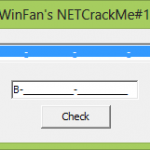
CanYouHack.it Crack6 Challenge – Lights Out (English)

Warning: This challenge is still active and therefore should not be resolved using this information.
Aviso: Este reto sigue en activo y por lo tanto no se debería resolver utilizando esta información.

Intro

This crackme is for the crack challenge 6 of canyouhack.it.

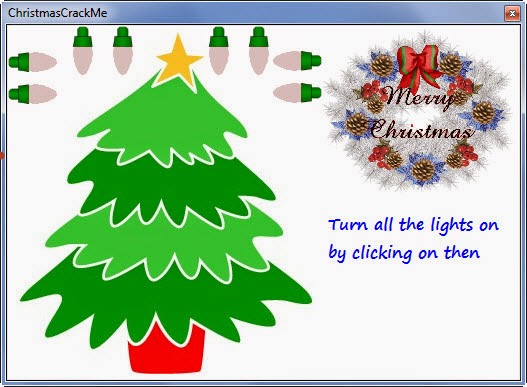
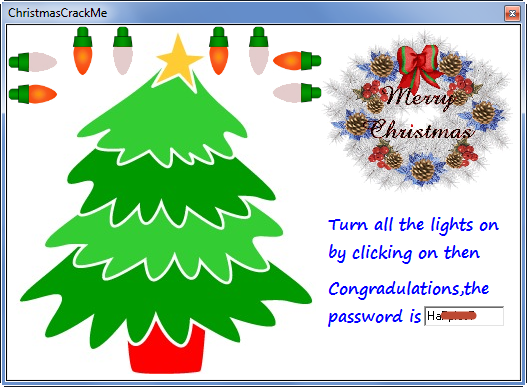
In this crackme the goal is to turn on all the lights. Note that a light off to the next, so if we interrupt this, we win.

Tools

Exeinfo (For crackme info)

Delphi Decompiler (For decompile)

 OllyDbg (For debug)
Decompiling

With Delphi Decompiler we can found easy the buttons and his offsets.
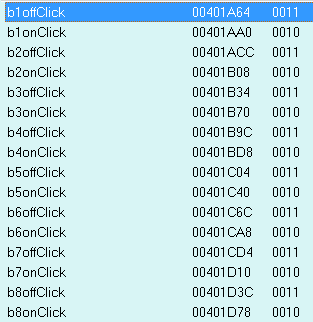
Go to the offset 401A64 in OllyDbg and analyze the code.
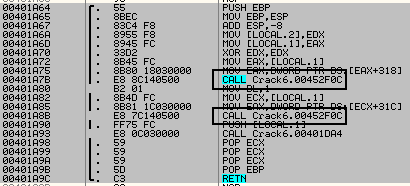
We view two jumps, one turn ON the light and the other Turn OFF the next light. Patching the call from offset 401A8B we get the serial.
Links


File carving is the process of reassembling computer files from fragments in the absence of filesystem metadata. Wikipedia. "File carving", literalmente tallado
Aviso: Este crackme forma parte de una serie de pruebas de Yoire.com que todavía está en activo. Lo ético si
Intro Hoy tenemos un crackme realizado en Visual C++ 6. Es el típico serial asociado a un nombre. El algoritmo
Warning: This challenge is still active and therefore should not be resolved using this information. Aviso: Este reto sigue en

List of file signatures for file carving

File carving is the process of reassembling computer files from fragments in the absence of filesystem metadata. Wikipedia.

«File carving», literalmente tallado de archivos aunque lo traduciremos como extracción, es el proceso de re-ensamblado de archivos extraídos de un conjunto de mayor tamaño.

Índice

  1. Image files / Archivos de imagen
  2. Microsoft Office >2007
  3. Open Office
  4. Autocad
  5. Others / Otros
  6. Links / Enlaces

List of headers and tails / Lista de cabeceras y pies

Header = Cabecera

Footer or tail = Pie

Image files / Archivos de imagen

  • JPEG
    • Header: FFD8
    • Footer: FFD9
  • GIF87a
    • Header: 47 49 46 38 37 61
    • Footer: 00 3B
  • GIF89a
    • Header: 47 49 46 38 39 61
    • Footer: 00 3B
  • BMP
    • Header: 42 4D
    • Footer: Don’t have footer, but size is in bytes 2,3,4,5 in little-endian order (low byte first).
      • Example: 00 00 C0 38 == 49208 bytes

bmpsize

  • PNG
    • Header: 89 50 4E 47 0D 0A 1A 0A
    • Footer: 49 45 4E 44 AE 42 60 82

Microsoft Office >2007

All this documents have the same header and footer, because of this, we need search the middle bytes. This type uses a ZIP file package.

Los documentos de Microsoft Office >2007 tienen la misma cabecera y pie, por lo que necesitamos bytes intermedios para distinguirlos. Usan encapsulado ZIP.

  • DOCX
    • Header: 50 4B 03 04 14 00 06 00
      • Middle: 77 6F 72 64 (word)
    • Footer: 50 4B 05 06 (PK..) followed by 18 additional bytes at the end of the file.
  • XLSX
    • Header: 50 4B 03 04 14 00 06 00
      • Middle: 77 6F 72 6B 73 68 65 65 74 73 (worksheets)
    • Footer: 50 4B 05 06 (PK..) followed by 18 additional bytes at the end of the file.
  • PPTX
    • Header: 50 4B 03 04 14 00 06 00
      • Middle: 70 72 65 73 65 6E 74 61 74 69 6F 6E (presentation)
    • Footer: 50 4B 05 06 (PK..) followed by 18 additional bytes at the end of the file.
  • MDB / ACCDB
    • Header: 00 01 00 00 53 74 61 6E 64 61 72 64 20 4A 65 74 20 44 42 (….Standard Jet DB)
    • Footer: Don’t have footer.

Open Office

All this documents have the same header and footer, because of this, we need some bytes to differentiate them. In this case we can do this jumping 73 bytes from header. This type uses a ZIP file package.

Los documentos de OpenOffice tienen la misma cabecera y pie, por lo que necesitamos bytes intermedios para distinguirlos. Usan encapsulado ZIP.

  • ODS
    • Header: 50 4B 03 04 14 (PK..) jump +73 (0x49) bytes and 73 70 72 65 (spre)
    • Footer: 6D 61 6E 69 66 65 73 74 2E 78 6D 6C 50 4B 05 06 (manifest.xmlPK) followed by 18 additional bytes.
  • ODT
    • Header: 50 4B 03 04 14 (PK..) jump +73 (0x49) bytes and 74 65 78 64 (text)
    • Footer: 6D 61 6E 69 66 65 73 74 2E 78 6D 6C 50 4B 05 06 (manifest.xmlPK) followed by 18 additional bytes.
  • ODB
    • Header: 50 4B 03 04 14 (PK..) jump +73 (0x49) bytes and 62 61 73 65 (base)
    • Footer: 6D 61 6E 69 66 65 73 74 2E 78 6D 6C 50 4B 05 06 (manifest.xmlPK) followed by 18 additional bytes.
  • ODG
    • Header: 50 4B 03 04 14 (PK..) jump +73 (0x49) bytes and 67 72 61 70 (grap)
    • Footer: 6D 61 6E 69 66 65 73 74 2E 78 6D 6C 50 4B 05 06 (manifest.xmlPK) followed by 18 additional bytes.
  • ODF
    • Header: 50 4B 03 04 14 (PK..) jump +73 (0x49) bytes and 66 6F 72 6D (form)
    • Tail: 6D 61 6E 69 66 65 73 74 2E 78 6D 6C 50 4B 05 06 (manifest.xmlPK) followed by 18 additional bytes.
  • ODP
    • Header: 50 4B 03 04 14 (PK..) jump +73 (0x49) bytes and 70 72 65 73 (pres)
    • Footer: 6D 61 6E 69 66 65 73 74 2E 78 6D 6C 50 4B 05 06 (manifest.xmlPK) followed by 18 additional bytes.

Autocad

  • DWG (R11/R12 versions)
    • Header: 41 43 31 30 30 39
    • Footer: CD 06 B2 F5 1F E6
  • DWG (R14 version)
    • Header: 41 43 31 30 31 34
    • Footer: 62 A8 35 C0 62 BB EF D4
  • DWG (2000 version)
    • Header: 41 43 31 30 31 34
    • Footer: DB BF F6 ED C3 55 FE
  • DWG (>2007 versions)
    • Header: 41 43 31 30 XX XX
    • Footer: Don’t have

Note: >2007 versions have two patterns and the key is the position 0x80. If in this position we get the bytes «68 40 F8 F7 92», we need to search again for this bytes and displace 107 bytes to find the end of the file. If in the position 0x80 we get another different bytes, we need to search again this bytes and displace 1024 bytes to find the end of the file.

Nota: Las versiones >2007 siguen dos patrones y la clave está en la posición 0x80. Si en la posicion 0x80 obtenemos los bytes «68 40 F8 F7 92», los buscamos una segunda vez y ha 107 bytes encontramos el final del archivo. Si en la posición 0x80 obtenemos otros bytes diferentes a los del primer caso, los volvemos a buscar y a 1024 bytes hallaremos el final del archivo.

Others / Otros

  • PDF
    • Header: 25 50 44 46 (%PDF)
    • Footers:
      • 0A 25 25 45 4F 46 (.%%EOF) or
      • 0A 25 25 45 4F 46 0A (.%%EOF.) or
      • 0D 0A 25 25 45 4F 46 0D 0A (..%%EOF..) or
      • 0D 25 25 45 4F 46 0D (.%%EOF.)
  • ZIP
    • Header: 50 4B 03 04
    • Footer: 50 4B 05 06 (PK..) followed by 18 additional bytes at the end of the file.
  • RAR (< 4.x version)
    • Header: 52 61 72 21 1A 07 00
    • Tail: C4 3D 7B 00 40 07 00
  • 7ZIP
    • Header: 37 7A BC AF 27 1C 00 03  (7z¼¯’…)
    • Footer: 01 15 06 01 00 20 followed by 5 additional bytes at the end of the file.
  • RTF
    • Header: 7B 5C 72 74 66 31
    • Footer: 5C 70 61 72 20 7D

Links / Enlaces

Yoire PE Stage 3 Reversing Challenge (Benten) – Fuerza Bruta

Aviso: Este crackme forma parte de una serie de pruebas de Yoire.com que todavía está en activo. Lo ético si continuas leyendo este manual es que no utilices la respuesta para completar la prueba sin esfuerzo. 😉

Analizando

Abrimos el crackme con Ollydbg y vamos a las referenced strings.

Pinchamos sobre cualquiera.


Vemos un «Call» donde seguramente se generará un SUM en función del serial metido ya que después del Call vemos una comprobación contra «B79E763E» lo que nos da una pista de que vamos a tener que utilizar fuerza bruta para llegar a ese valor. Vamos a explorar el Call.

Lo que resalto con la flecha son una par de Calls que podemos NOPear ya que lo único que hacen es ralentizar la generación del SUM.
A continuación vamos a analizar el algoritmo de generación del SUM.
MOV EDI,5EED                   - EDI = 5EED
JMP SHORT 01_crack.004010D7
/MOV EAX,EDI                   <----Bucle
|SHL EAX,5                     - 5EED * 32 = BDDA0
|MOVZX EDX,BYTE PTR DS:[EBX]   - Coge el dígito
|XOR EAX,EDX                   - BDDA0 XOR digito
|MOV EDI,EAX
|XOR EDI,1D0B1EED              - XOR 1D0B1EED
|INC EBX
|..
|MOV ESI,EAX
CMP BYTE PTR DS:[EBX],0
JNZ SHORT 01_crack.004010B4   - Bucle ---->

Para un serial de tres dígitos la secuencia sería esta (valores en hexadecimal):

1º Digit —> BDDA0 XOR 1D0B1EED XOR 1ºDigit XOR 1D0B1EED = Temp
2º Digit —> Temp = Temp * 20 Xor 1D0B1EED XOR 2ºDigit
3º Digit —> Temp = Temp * 20 Xor 1D0B1EED XOR 3ºDigit

CMP Temp, B79E763E

Aplicando Fuerza Bruta

La creación del «BruteForcer» os la dejo a vosotros. Aquí teneis un fragmento hecho en VB.Net.

Dim temp As Long
Dim temp2 As String
Dim letter As Integer
Dim brute As String
brute = TextBox4.Text
temp = 0
temp = Asc(Mid(brute, 1, 1)) Xor 487268077 Xor 777632
temp2 = Hex(temp)
temp2 = Microsoft.VisualBasic.Right(temp2, 8)
temp = Convert.ToUInt64(temp2, 16)
For i = 2 To Len(brute)
letter = Asc(Mid(brute, i, 1))
temp = temp * 32
temp2 = Hex(temp)
temp2 = Microsoft.VisualBasic.Right(temp2, 8)
temp = Convert.ToUInt64(temp2, 16)
temp = temp Xor 487268077
temp2 = Hex(temp)
temp2 = Microsoft.VisualBasic.Right(temp2, 8)
temp = Convert.ToUInt64(temp2, 16)
temp = temp Xor letter
'
temp2 = Hex(temp)
Next

Links


Introducción Objetivo del juego y normas Código inicial Primeras modificaciones Terminando la faena Código ganador Curiosidades Enlaces Introducción Hace tiempo
Warning: This challenge is still active and therefore should not be resolved using this information. Aviso: Este reto sigue en
Introducción Esta es la primera entrega de tres en las que vamos a  ver tres crackmes que todo reverser debería
http://youtu.be/KR3PgtDMjmg Lista de reproducción

Tron – Reto IA de yoire.com

Introducción

Hace tiempo que me aficioné a los retos de Hacking y Cracking, y si bien la mayoría de ellos consisten en desencriptar una clave o realizar ingeniería inversa sobre un ejecutable, también los hay sobre programación pura y dura.

En esta ocasión se nos proporciona un código «muestra» parecido a PHP o C++ y tenemos que ingeniarnoslas para mejorarlo y ganar a la máquina.

Objetivo del juego y normas

El objetivo de esta misión es ganar a Tr0n en su propio juego: las carreras de motos. Se te proporcionará un programa (código) funcional para que veas como se controla el vehiculo. Usando tu inteligencia, tendrás que entender su uso y mejorarlo, ya que no es lo suficientemente bueno como para ganar a Tr0n. Tr0n lleva ya bastante tiempo en la parrilla de juegos y es bastante habilidoso 🙂

Cuando venzas a Tr0n un mínimo de 5 veces consecutivas, se te dará por superada esta prueba.

Buena suerte!!!

[ Available functions / Funciones disponibles ]
direction() returns current direction, change to a new one with direction([newdir])
getX(), getY() returns X and Y coordinates
collisionDistance() | collisionDistance([anydir]) returns the distance until collision
Note: parameters [*dir] can be empty or one of this values: UP DOWN LEFT or RIGHT

[ Constants / Constantes ]
UP DOWN LEFT RIGHT MAX_X MAX_Y

[ Rules / Reglas ]
Try to survive driving your bike and … / Intenta sobrevivir conduciendo tu moto y…
Don’t cross any line / No cruces ninguna línea
or crash with the corners! / o choques con las esquinas!

[ Mission / Mision ]
Use well this controller and beat Tr0n 5 consecutive times to score in this game
Usa bien este controlador y vence a Tr0n 5 veces consecutivas para puntuar en este juego

Código inicial

Nada más comenzar vemos que hemos perdido nuestra primera partida con el siguiente código:

	function controller(playerController $c){
		if($c->direction()==UP && $c->getY()<10){
			if(rand(0,1)==0) $c->direction(LEFT);
				else $c->direction(RIGHT);
			goto done;
		}
		if($c->direction()==DOWN && MAX_Y-$c->getY()<10){
			if(rand(0,1)==0) $c->direction(LEFT);
				else $c->direction(RIGHT);
			goto done;
		}
		if($c->direction()==LEFT && $c->getX()<10){
			if(rand(0,1)==0) $c->direction(UP);
				else $c->direction(DOWN);
			goto done;
		}
		if($c->direction()==RIGHT && MAX_X-$c->getX()<10){
			if(rand(0,1)==0) $c->direction(UP);
				else $c->direction(DOWN);
		}
		done:
	}

Nosotros somos el AZUL y la máquina es el VERDE.

loose_inicial

Primeras modificaciones

Lo primero que tenemos que modificar son las distancias de las coordenadas que estan puestas en «<10» al mínimo, que sería «<2«. También sustituir la aleatoriedad «rand(0,1)==0» por algo más útil y comenzar a usar la función «collisionDistance()«.

Como podéis observar en el código inferior, usamos la función «collisionDistance()» para detectar cuando estamos a punto de chocar «collisionDistance() ==1» y para detectar a que lado nos conviene más girar en función de donde podamos recorrer más distancia «if($c->collisionDistance([LEFT]) >2) $c->direction(LEFT); else $c->direction(RIGHT);«.

if($c->direction()==UP && $c->getY()==1 && $c->collisionDistance() ==1){
			if($c->collisionDistance([LEFT]) >2) $c->direction(LEFT);
				else $c->direction(RIGHT);
		}
if($c->direction()==DOWN && MAX_Y-$c->getY()<2 || $c->collisionDistance() ==1){
			if($c->collisionDistance([LEFT]) >2) $c->direction(LEFT);
				else $c->direction(RIGHT);
		}
if($c->direction()==LEFT && $c->getX()==1 && $c->collisionDistance() ==1){
			if($c->collisionDistance([UP]) >2) 
                                $c->direction(UP);
				else 
                                $c->direction(DOWN);
		}
if($c->direction()==RIGHT && MAX_X-$c->getX()<2 || $c->collisionDistance() ==1){
			if($c->collisionDistance([UP]) >2) $c->direction(UP);
				else $c->direction(DOWN);
				
		}

Terminando la faena

El código anterior de por sí no nos resuelve mucho si no afinamos un poco más, comprobando todos las posibles colisiones y tomando la dirección correcta en función de la mayor distancia a recorrer.

    if($c->collisionDistance([UP])==1 || $c->collisionDistance() ==1){
             if($c->collisionDistance([LEFT]) > $c->collisionDistance([RIGHT]))
               $c->direction(LEFT);
             else 
               $c->direction(RIGHT);
     }
     if($c->collisionDistance([DOWN])==1 || $c->collisionDistance() ==1){
            if($c->collisionDistance([LEFT]) > $c->collisionDistance([RIGHT]))
               $c->direction(LEFT);
             else 
               $c->direction(RIGHT);
     }
     if($c->collisionDistance([RIGHT])==1 || $c->collisionDistance() ==1){
             if($c->collisionDistance([UP]) > $c->collisionDistance([DOWN]))
               $c->direction(UP);
             else 
               $c->direction(DOWN);
     }
     if($c->collisionDistance([LEFT])==1 || $c->collisionDistance() ==1){
          if($c->collisionDistance([UP]) > $c->collisionDistance([DOWN]))
               $c->direction(UP);
             else 
               $c->direction(DOWN);
     }

Código ganador

El código que utilicé yo para ganar a Tron es el siguiente:

function controller(playerController $c){
uno:
if($c->direction()==UP && $c->getY()==1 && $c->collisionDistance() ==1){
			if($c->collisionDistance([LEFT]) >2) $c->direction(LEFT);
				else $c->direction(RIGHT);
				
		}
if($c->direction()==DOWN && MAX_Y-$c->getY()<2 || $c->collisionDistance() ==1){
			if($c->collisionDistance([LEFT]) >2) $c->direction(LEFT);
				else $c->direction(RIGHT);
				
		}
if($c->direction()==LEFT && $c->getX()==1 && $c->collisionDistance() ==1){
			if($c->collisionDistance([UP]) >2) 
                                $c->direction(UP);
				else 
                                $c->direction(DOWN);
				
		}
if($c->direction()==RIGHT && MAX_X-$c->getX()<2 || $c->collisionDistance() ==1){
			if($c->collisionDistance([UP]) >2) $c->direction(UP);
				else $c->direction(DOWN);
				
		}
dos:
    if($c->collisionDistance([UP])==1 || $c->collisionDistance() ==1){
             if($c->collisionDistance([LEFT]) > $c->collisionDistance([RIGHT]))
               $c->direction(LEFT);
             else 
               $c->direction(RIGHT);
     }
     if($c->collisionDistance([DOWN])==1 || $c->collisionDistance() ==1){
            if($c->collisionDistance([LEFT]) > $c->collisionDistance([RIGHT]))
               $c->direction(LEFT);
             else 
               $c->direction(RIGHT);
     }
     if($c->collisionDistance([RIGHT])==1 || $c->collisionDistance() ==1){
             if($c->collisionDistance([UP]) > $c->collisionDistance([DOWN]))
               $c->direction(UP);
             else 
               $c->direction(DOWN);
     }
     if($c->collisionDistance([LEFT])==1 || $c->collisionDistance() ==1){
          if($c->collisionDistance([UP]) > $c->collisionDistance([DOWN]))
               $c->direction(UP);
             else 
               $c->direction(DOWN);
     }
		done:
	}

Mis jugadas ganadoras:

01

02

03

04

05

El código no es infalible ya que como comprabaréis vosotros mismos, no se puede ganar siempre por el mero hecho de la aleatoriedad y de la suerte. Cuando dispongais de un código decente, ejecutarlo varias veces para estar seguros antes de desecharlo.

Curiosidades

Como se suele decir, la banca siempre gana, y en este caso no iba a ser menos y es que en caso de empate ¡la banca gana!

empate


Por último deciros que podéis utilizar el código ya que la web detecta los códigos ganadores para que no se repitan.

Enlaces

CanYouHack.it Mobile2 Challenge – Follow The Web (English)

Warning: This challenge is still active and therefore should not be resolved using this information.
Aviso: Este reto sigue en activo y por lo tanto no se debería resolver utilizando esta información.

Table of Contents

Intro

This crackme is for the challenge Mobile 2 of canyouhack.it.
This time you need to understand how the crackme works over the web.

Decompiling

The crackme is given again at Google Play, so the first step is to install and recover the APK for decompiling. The latter, I leave to you.
Open the victim with APK Studio and view the content of Mobile2.java
First we view one link:
http://canyouhack.it/Content/Challenges/Mobile/2/index.php
 If we go to the link, we view one string like a hash: 68a571bcf7bc9f76d43bf931f413ab2c. Umm, it’s like MD5. Go to decrypt online and we get the pass: «canyouhack.it». But if we test this password in the crackme, surprise!, nothing happens. We need to continue analyzing the code. Later we view the next interesting link:
«http://canyouhack.it/Content/Challenges/Mobile/2/submit.php?Token=» + Mobile2.token + «&Attempts=»
The program submit one token and concatenate with the number of attempts. Ok but what is the token and what is the number of attempts?
In this point we have to try with the information we already have.
Testing with the link of bottom we get “Nice try!” message.
http://canyouhack.it/Content/Challenges/Mobile/2/submit.php?Token=68a571bcf7bc9f76d43bf931f413ab2c&&Attempts=0
Testing with the link of bottom we get “Very Good, the password is Top*****!” message.
http://canyouhack.it/Content/Challenges/Mobile/2/submit.php?Token=68a571bcf7bc9f76d43bf931f413ab2c&&Attempts=1

  Links