Ancillary v2 – File Carving Tool

digital-fingerprint.png

  1. Abstract / Resumen
  2. Basic manual / Manual básico
  3. Example Video / Vídeo de ejemplo
  4. List of headers and tails / Lista de cabeceras y pies
  5. References / Referencias
  6. License / Licencia
  7. Feedback / Feedback
  8. Downloads / Descargas

1. Abstract / Resumen

Ancillary was born as a personal tool used to solve forensic challenges. Eventually it was improving and I realized that people were asking me for the program. Seeing that it was a useful tool, I decided to share it with the community and finally I decided to publish it. In abstract, Ancillary process a file looking for certain types of files like images, documents, compressed files etc. The program only process uncompressed files. If you suspect that the file is compressed or encrypted first solve this trouble and then process with Ancillary.

Ancillary nació como herramienta personal para resolver retos forenses. Con el tiempo me di cuenta de que lo usaba bastante gente a mi alrededor y decidí compartirlo con la comunidad y publicarlo. En resumen, Ancillary procesa ficheros buscando en su interior imágenes, documentos, archivos comprimidos etc. Los ficheros procesados no deben estar comprimidos ni encriptados. Si sospechas que el fichero está comprimido o encriptado, resuelve ese problema y después procésalo con Ancillary.

2. Basic manual / Manual básico

The version 2.0 has a new GUI where we can drag and drop a file and Ancillary will be process it immediately appearing the results in tree mode for a better viewing. Because the process of the files require many time, for the most of files, only appear headers, and if we make double click in the header of the file what we want, Ancillary search the tail. When the file is process, we can make right click over the file and save as. In the next section you can view a explanatory video.

La versión 2.0 tiene una nueva interfaz de usuario donde podemos arrastrar y soltar el fichero y Ancillary lo procesará mostrando los ficheros encontrados en modo árbol. Debido a que el procesado de ficheros requiere tiempo, en la mayoría de archivos solo aparecen las cabeceras, y si hacemos doble click sobre el fichero que queremos recuperar, Ancillary buscará el final del archivo y nos lo mostrará. Una vez procesado el archivo, si pulsamos con el botón derecho sobre el archivo podremos guardarlo. En el siguiente apartado puedes ver un vídeo explicativo.

3. Video / Vídeo

4. List of headers and tails / Lista de cabeceras y pies

Ancillary at present works with 19 type of files like JPG, PNG, GIF, BMP, RAR, ZIP, DOCX, XLSX, PPTX, RTF, PDF, ODS, ODT, ODB, ODG, ODF, ODP and DWG.

Ancillary de momento trabaja con 19 tipos de archivos, JPG, PNG, GIF, BMP, RAR, ZIP, DOCX, XLSX, PPTX, RTF, PDF, ODS, ODT, ODB, ODG, ODF, ODP y DWG.

  • Image files / Archivos de imagen
HEADERTAILEXTENSIONTYPEINFO
FF D8FF D9jpg or jpegImage file
47 49 46 38 37 6100 3BgifImage fileGIF87a
47 49 46 38 39 6100 3BgifImage fileGIF89a
42 4DDon't havebmpImage fileSize in bytes 2-5.
89 50 4E 47 0D 0A 1A 0A49 45 4E 44 AE 42 60 82pngImage file

Note: BMP size is in bytes 2-5 in little-endian order (low byte first). We only can read this bytes for get the file.

bmpsize

Nota: El tamaño de los archivos BMP se encuentra en los bytes 2-5 en formato little-endian. Leyendo esos bytes podemos extraer el archivo.

  • Other files / Otros
HEADERTAILEXTENSIONTYPE
25 50 44 460A 25 25 45 4F 46pdfPortable Document Format
25 50 44 460A 25 25 45 4F 46 0ApdfPortable Document Format
25 50 44 460D 0A 25 25 45 4F 46 0D 0ApdfPortable Document Format
25 50 44 460D 25 25 45 4F 46 0DpdfPortable Document Format
50 4B 03 0450 4B 05 06 + 18 byteszipCompressed format
37 7A BC AF 27 1C 00 0301 15 06 01 00 20 + 5 bytes7zipCompressed format
52 61 72 21 1A 07 00C4 3D 7B 00 40 07 00rarCompressed format
7B 5C 72 74 66 315C 70 61 72 20 7DrtfRich text format
  • Microsoft Office >2007

Microsoft Office >2007 documents have the same header and footer, because of this, we need search the middle bytes. This type uses a ZIP file package.

Los documentos de Microsoft Office >2007 tienen la misma cabecera y pie, por lo que necesitamos bytes intermedios para distinguirlos. Usan encapsulado ZIP.

HEADERMIDDLETAILEXTENSIONTYPE
50 4B 03 04 1477 6F 72 6450 4B 05 06 + 18 bytesdocxWord >2007
50 4B 03 04 1477 6F 72 6B 73 6850 4B 05 06 + 18 bytesxlsxExcel >2007
50 4B 03 04 1470 72 65 73 65 6E50 4B 05 06 + 18 bytespptxPowerPoint >2007

  • OpenOffice

OpenOffice documents have the same header and footer, because of this, we need search the middle bytes. This type uses a ZIP file package.

Los documentos de OpenOffice tienen la misma cabecera y pie, por lo que necesitamos bytes intermedios para distinguirlos. Usan encapsulado ZIP.

HEADERMIDDLETAILEXTENSIONTYPE
50 4B 03 04 1473 70 72 6550 4B 05 06 + 18 bytesodsOpenOffice Spreadsheet
50 4B 03 04 1474 65 78 6450 4B 05 06 + 18 bytesodtOpenOffice Writer
50 4B 03 04 1462 61 73 6550 4B 05 06 + 18 bytesodbOpenOffice Base
50 4B 03 04 1467 72 61 7050 4B 05 06 + 18 bytesodgOpenOffice Draw
50 4B 03 04 1466 6F 72 6D50 4B 05 06 + 18 bytesodfOpenOffice Math
50 4B 03 04 1470 72 65 7350 4B 05 06 + 18 bytesodpOpenOffice Impress

  • AutoCAD

Ancillary works with R11, R12, R14, 2000 and >2007 versions.

Ancillary trabaja con las versiones R11, R12, R14, 2000 y >2007.

HEADERTAILEXTENSIONTYPE
41 43 31 30 30 39CD 06 B2 F5 1F E6dwgR11/12 versions
41 43 31 30 31 3462 A8 35 C0 62 BB EF D4dwgR14 version
41 43 31 30 31 34DB BF F6 ED C3 55 FEdwg2000 version
41 43 31 30 XX XXDon't havedwg>2007 versions

Note: >2007 versions have two patterns and the key is the position 0x80. If in this position we get the bytes «68 40 F8 F7 92», we need to search again for this bytes and displace 107 bytes to find the end of the file. If in the position 0x80 we get another different bytes, we need to search again this bytes and displace 1024 bytes to find the end of the file.

Nota: Las versiones >2007 siguen dos patrones y la clave está en la posición 0x80. Si en la posicion 0x80 obtenemos los bytes «68 40 F8 F7 92», los buscamos una segunda vez y a 107 bytes encontramos el final del archivo. Si en la posición 0x80 obtenemos otros bytes diferentes a los del primer caso, los volvemos a buscar y a 1024 bytes hallaremos el final del archivo.

5. References / Referencias

[1] http://forensicswiki.org

[2] http://www.garykessler.net/library/file_sigs.html

6. License / Licencia

At the moment the license is FREEWARE but in the future will be FREE SOFTWARE.

ANCILLARY IS PROVIDED «AS IS», WITHOUT WARRANTY OF ANY KIND, EXPRESS OR IMPLIED, INCLUDING BUT NOT LIMITED TO THE WARRANTIES OF MERCHANTABILITY, FITNESS FOR A PARTICULAR PURPOSE AND NON INFRINGEMENT. IN NO EVENT SHALL THE AUTHORS OR COPYRIGHT HOLDERS BE LIABLE FOR ANY CLAIM, DAMAGES OR OTHER LIABILITY, WHETHER IN AN ACTION OF CONTRACT, TORT OR OTHERWISE, ARISING FROM, OUT OF OR IN CONNECTION WITH THE SOFTWARE OR THE USE OR OTHER DEALINGS IN THE SOFTWARE.

Por el momento la licencia es FREEWARE pero en el futuro sera SOFTWARE LIBRE.

ANCILLARY ES DISTRIBUIDO «TAL CUAL», SIN GARANTÍA DE NINGÚN TIPO, EXPRESA O IMPLÍCITA, INCLUYENDO PERO NO LIMITADO A LAS GARANTÍAS DE COMERCIALIZACIÓN, IDONEIDAD PARA UN PROPÓSITO PARTICULAR Y NO INFRACCIÓN. EN NINGÚN CASO LOS AUTORES O LOS TITULARES RESPONSABLES DEL COPYRIGHT POR CUALQUIER RECLAMO, DAÑO U OTRA RESPONSABILIDAD, YA SEA EN UNA ACCIÓN DE CONTRATO, AGRAVIO O CUALQUIER OTRO MOTIVO, DE O EN RELACIÓN CON EL SOFTWARE O EL USO U OTROS TRATOS EN EL SOFTWARE.

7. Feedback / Feedback

If you have any question, doubt or suggestion, please mail me to deurus at deurus dot info or deurus82 at gmail dot com.

Si tienes cualquier pregunta, duda o sugerencia, envía una email a deurus at deurus dor info o deurus82 at gmail dot com.

8. Downloads / Descargas

This tool is FREE of spyware, viruses, adware and others

Esta herramienta esta LIBRE de spyware, virus, adware y otros

virustotal


File carving is the process of reassembling computer files from fragments in the absence of filesystem metadata. Wikipedia. "File carving", literalmente tallado
Intro We require your services once again. An employee from our company had recently been identified as a known criminal
Intro President’s cat was kidnapped by separatists. A suspect carrying a USB key has been arrested. Berthier, once again, up

List of file signatures for file carving

File carving is the process of reassembling computer files from fragments in the absence of filesystem metadata. Wikipedia.

«File carving», literalmente tallado de archivos aunque lo traduciremos como extracción, es el proceso de re-ensamblado de archivos extraídos de un conjunto de mayor tamaño.

Índice

  1. Image files / Archivos de imagen
  2. Microsoft Office >2007
  3. Open Office
  4. Autocad
  5. Others / Otros
  6. Links / Enlaces

List of headers and tails / Lista de cabeceras y pies

Header = Cabecera

Footer or tail = Pie

Image files / Archivos de imagen

  • JPEG
    • Header: FFD8
    • Footer: FFD9
  • GIF87a
    • Header: 47 49 46 38 37 61
    • Footer: 00 3B
  • GIF89a
    • Header: 47 49 46 38 39 61
    • Footer: 00 3B
  • BMP
    • Header: 42 4D
    • Footer: Don’t have footer, but size is in bytes 2,3,4,5 in little-endian order (low byte first).
      • Example: 00 00 C0 38 == 49208 bytes

bmpsize

  • PNG
    • Header: 89 50 4E 47 0D 0A 1A 0A
    • Footer: 49 45 4E 44 AE 42 60 82

Microsoft Office >2007

All this documents have the same header and footer, because of this, we need search the middle bytes. This type uses a ZIP file package.

Los documentos de Microsoft Office >2007 tienen la misma cabecera y pie, por lo que necesitamos bytes intermedios para distinguirlos. Usan encapsulado ZIP.

  • DOCX
    • Header: 50 4B 03 04 14 00 06 00
      • Middle: 77 6F 72 64 (word)
    • Footer: 50 4B 05 06 (PK..) followed by 18 additional bytes at the end of the file.
  • XLSX
    • Header: 50 4B 03 04 14 00 06 00
      • Middle: 77 6F 72 6B 73 68 65 65 74 73 (worksheets)
    • Footer: 50 4B 05 06 (PK..) followed by 18 additional bytes at the end of the file.
  • PPTX
    • Header: 50 4B 03 04 14 00 06 00
      • Middle: 70 72 65 73 65 6E 74 61 74 69 6F 6E (presentation)
    • Footer: 50 4B 05 06 (PK..) followed by 18 additional bytes at the end of the file.
  • MDB / ACCDB
    • Header: 00 01 00 00 53 74 61 6E 64 61 72 64 20 4A 65 74 20 44 42 (….Standard Jet DB)
    • Footer: Don’t have footer.

Open Office

All this documents have the same header and footer, because of this, we need some bytes to differentiate them. In this case we can do this jumping 73 bytes from header. This type uses a ZIP file package.

Los documentos de OpenOffice tienen la misma cabecera y pie, por lo que necesitamos bytes intermedios para distinguirlos. Usan encapsulado ZIP.

  • ODS
    • Header: 50 4B 03 04 14 (PK..) jump +73 (0x49) bytes and 73 70 72 65 (spre)
    • Footer: 6D 61 6E 69 66 65 73 74 2E 78 6D 6C 50 4B 05 06 (manifest.xmlPK) followed by 18 additional bytes.
  • ODT
    • Header: 50 4B 03 04 14 (PK..) jump +73 (0x49) bytes and 74 65 78 64 (text)
    • Footer: 6D 61 6E 69 66 65 73 74 2E 78 6D 6C 50 4B 05 06 (manifest.xmlPK) followed by 18 additional bytes.
  • ODB
    • Header: 50 4B 03 04 14 (PK..) jump +73 (0x49) bytes and 62 61 73 65 (base)
    • Footer: 6D 61 6E 69 66 65 73 74 2E 78 6D 6C 50 4B 05 06 (manifest.xmlPK) followed by 18 additional bytes.
  • ODG
    • Header: 50 4B 03 04 14 (PK..) jump +73 (0x49) bytes and 67 72 61 70 (grap)
    • Footer: 6D 61 6E 69 66 65 73 74 2E 78 6D 6C 50 4B 05 06 (manifest.xmlPK) followed by 18 additional bytes.
  • ODF
    • Header: 50 4B 03 04 14 (PK..) jump +73 (0x49) bytes and 66 6F 72 6D (form)
    • Tail: 6D 61 6E 69 66 65 73 74 2E 78 6D 6C 50 4B 05 06 (manifest.xmlPK) followed by 18 additional bytes.
  • ODP
    • Header: 50 4B 03 04 14 (PK..) jump +73 (0x49) bytes and 70 72 65 73 (pres)
    • Footer: 6D 61 6E 69 66 65 73 74 2E 78 6D 6C 50 4B 05 06 (manifest.xmlPK) followed by 18 additional bytes.

Autocad

  • DWG (R11/R12 versions)
    • Header: 41 43 31 30 30 39
    • Footer: CD 06 B2 F5 1F E6
  • DWG (R14 version)
    • Header: 41 43 31 30 31 34
    • Footer: 62 A8 35 C0 62 BB EF D4
  • DWG (2000 version)
    • Header: 41 43 31 30 31 34
    • Footer: DB BF F6 ED C3 55 FE
  • DWG (>2007 versions)
    • Header: 41 43 31 30 XX XX
    • Footer: Don’t have

Note: >2007 versions have two patterns and the key is the position 0x80. If in this position we get the bytes «68 40 F8 F7 92», we need to search again for this bytes and displace 107 bytes to find the end of the file. If in the position 0x80 we get another different bytes, we need to search again this bytes and displace 1024 bytes to find the end of the file.

Nota: Las versiones >2007 siguen dos patrones y la clave está en la posición 0x80. Si en la posicion 0x80 obtenemos los bytes «68 40 F8 F7 92», los buscamos una segunda vez y ha 107 bytes encontramos el final del archivo. Si en la posición 0x80 obtenemos otros bytes diferentes a los del primer caso, los volvemos a buscar y a 1024 bytes hallaremos el final del archivo.

Others / Otros

  • PDF
    • Header: 25 50 44 46 (%PDF)
    • Footers:
      • 0A 25 25 45 4F 46 (.%%EOF) or
      • 0A 25 25 45 4F 46 0A (.%%EOF.) or
      • 0D 0A 25 25 45 4F 46 0D 0A (..%%EOF..) or
      • 0D 25 25 45 4F 46 0D (.%%EOF.)
  • ZIP
    • Header: 50 4B 03 04
    • Footer: 50 4B 05 06 (PK..) followed by 18 additional bytes at the end of the file.
  • RAR (< 4.x version)
    • Header: 52 61 72 21 1A 07 00
    • Tail: C4 3D 7B 00 40 07 00
  • 7ZIP
    • Header: 37 7A BC AF 27 1C 00 03  (7z¼¯’…)
    • Footer: 01 15 06 01 00 20 followed by 5 additional bytes at the end of the file.
  • RTF
    • Header: 7B 5C 72 74 66 31
    • Footer: 5C 70 61 72 20 7D

Links / Enlaces

Reto forense de HackThis!!

Intro

We require your services once again. An employee from our company had recently been identified as a known criminal named Brett Thwaits. He is considered to have stolen missile launch codes from the US navy which unfortunately were handed to us for a brief period of time. As of now, we are accussed of the theft and unless we do something about it, we’re gonna end in some serious trouble. Before Brett left, he formatted the thumbdrive which used to store the launch codes. Fortunately, our system had made a backup image of the drive. See if you can recover the fourth launch code. Good luck!

Requerimos una vez más sus servicios. Un empleado de nuestra empresa había sido identificado recientemente como el conocido criminal Brett Thwaites. Se considera que ha robado los códigos de lanzamiento de misiles de la Armada de Estados Unidos, que por desgracia fueron entregados a nosotros por un breve período de tiempo. A partir de ahora, se nos acusa del robo y a menos que hagamos algo al respecto, vamos a tener serios problemas. Antes de que Brett se fuera formateó el dispositivo que se usa para almacenar los códigos de lanzamiento. Afortunadamente, nuestro sistema había hecho una copia de seguridad de la unidad. Mira a ver si puedes recuperar los cuatro códigos de lanzamiento. ¡Buena suerte!

Análisis del archivo

  • Fichero: forensics1
  • Extensión: img
  • Tamaño: 25 MB (26.214.400 bytes)
  • Hash MD5: 56e4cd5b8f076ba8b7c020c7339caa2b

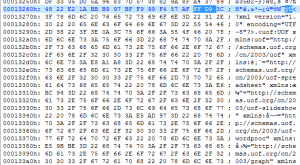
Echamos un vistazo al archivo con un editor hexadecimal y vemos encabezados de tipos de archivos conocidos, por lo que la unidad no está encriptada. Al no estar encriptada la imagen, usaremos una herramienta de creación propia, Ancillary. En esta ocasión usaremos la versión 2 alpha, que actualmente está en desarrollo, pero podéis usar tranquilamente la versión 1.x.

Ancillary nos muestra lo que ha encontrado en el archivo por lo que pasamos a analizarlo.

2016-03-06_11-20-52

Como siempre os digo en este tipo de retos, es difícil discriminar unos ficheros en favor de otros, ya que no sabemos si lo que buscamos va a estar en una imagen, documento u otro tipo de fichero codificado o no.

2016-03-06_11-33-55

Tras analizar todos los ficheros, rápidamente suscitan nuestro interés los ficheros RAR, y más cuando el fichero que contienen es un fichero de audio y su nombre es tan sugerente como «conversation_dtmf.wav«. Como podéis apreciar en la imagen, el fichero RAR está protegido con clave por lo que necesitamos esquivar ese obstaculo.

2016-03-06_11-35-32

Recuperando una clave de un archivo RAR

En este caso el software que voy a utilizar es cRARk, pero podéis utilizar cualquier otro. Como se muestra en la imagen de abajo, mi procesador es más bien modesto pero la clave no tiene más que tres dígitos por lo que no supone ninguna dificultad recuperarla.

2016-03-06_11-42-40

DTMF (Dual-Tone Multi-Frequency)

Una vez recuperado el archivo WAV, al reproducirlo escuchamos 16 tonos telefónicos que inmediatamente me recuerdan las aventuras del mítico «Capitán Crunch«. Os animo a leer la historia de John Draper y su famosa «Blue Box» ya que no tiene desperdicio y forma parte de la historia del Phreaking.

Por si no conocías la historia, el propio nombre del fichero wav nos da la pista clave de qué buscar al contener las siglas «DTMF«.

Al ser pulsada en el teléfono la tecla correspondiente al dígito que quiere marcar, se envían dos tonos, de distinta frecuencia: uno por columna y otro por fila en la que esté la tecla, que la central decodifica a través de filtros especiales, detectando qué dígito se marcó.

No tenemos más que buscar un decodificador de tonos para obtener los preciados códigos de lanzamiento.

2016-03-06_11-44-24

Links

Protegido: Reto forense «Find the cat» de Root-Me.org

Este contenido está protegido por contraseña. Para verlo introduce la contraseña.